

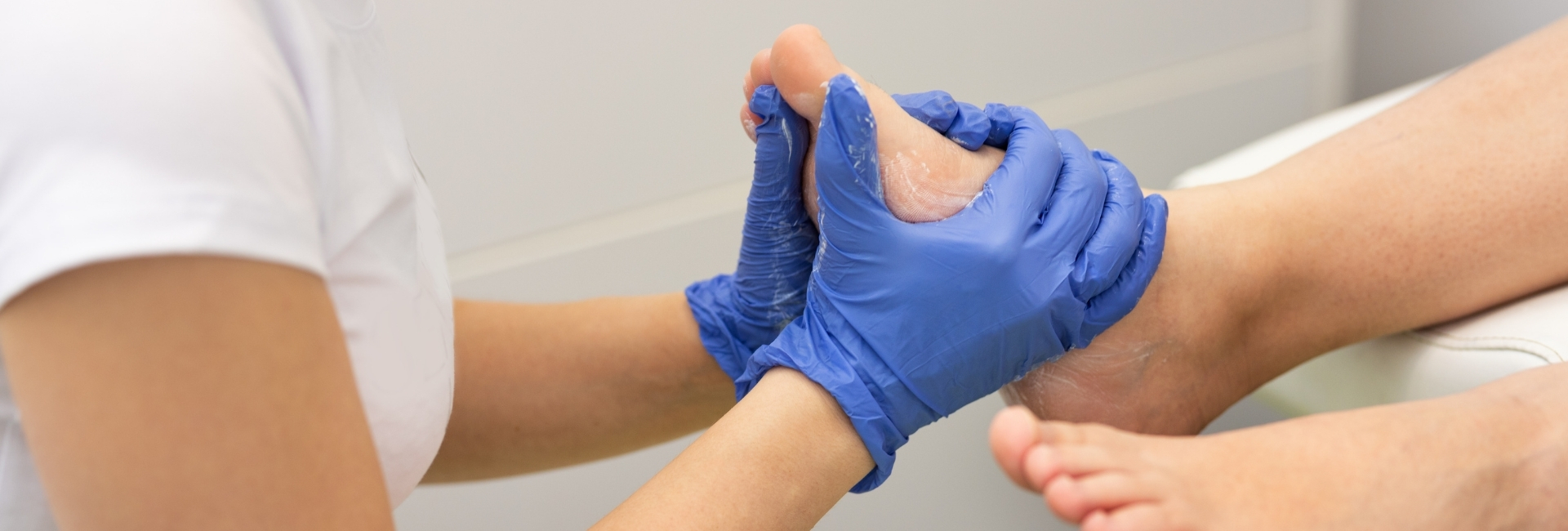
Diabetic foot wound care is more extensive than an ordinary dressing at home. The wound is assessed regularly, and the care plan is updated according to changing findings.
Wound size, depth, discharge, surrounding tissue condition and signs of infection are considered when selecting products and follow-up frequency.
- Professional wound assessment
- Removal of dead tissue when needed
- Maintaining appropriate moisture balance
- Regular measurement and follow-up
Wound assessment
Before care, wound depth, surrounding redness, discharge, odor and tissue viability are examined. These findings guide treatment.
Debridement and cleaning
Dead tissue that impedes healing may need to be removed with an appropriate method. A healthcare professional should decide on and perform debridement.
Dressing selection
The aim is a wound environment that is neither too dry nor too wet. The dressing and frequency of changes are selected according to discharge, infection risk and skin condition.
A safe approach at home
Do not apply chemicals, herbal products or arbitrary antibiotic creams to the wound without medical advice. How much and how to bear weight should follow the healthcare team's offloading plan based on wound location and clinical condition; individuals should not decide on complete non-weight-bearing or normal walking by themselves.
Do not wait if the wound changes
For new discharge, an unpleasant odor, increasing redness, swelling or color change, obtain professional assessment the same day, within one working day at the latest.
Understanding the dressing plan
The purpose of the dressing and how often it should be changed should be explained according to the wound's condition. Ask which product to use, who will provide care and which changes require contacting the clinic. No dressing suits every wound; the plan may change according to follow-up findings.
Tell the healthcare team about changes such as new redness around the wound, increased discharge or odor during care. Cutting wound tissue at home or cleaning it with unapproved products may cause harm. If tissue removal is needed, a healthcare professional competent in this area determines the appropriate method.
Related content
Scientific sources
This information is for general education. The assessment and treatment appropriate for you are determined by a medical examination.
Further reading: NIDDK foot health · NICE NG19 · AAOS patient guide