


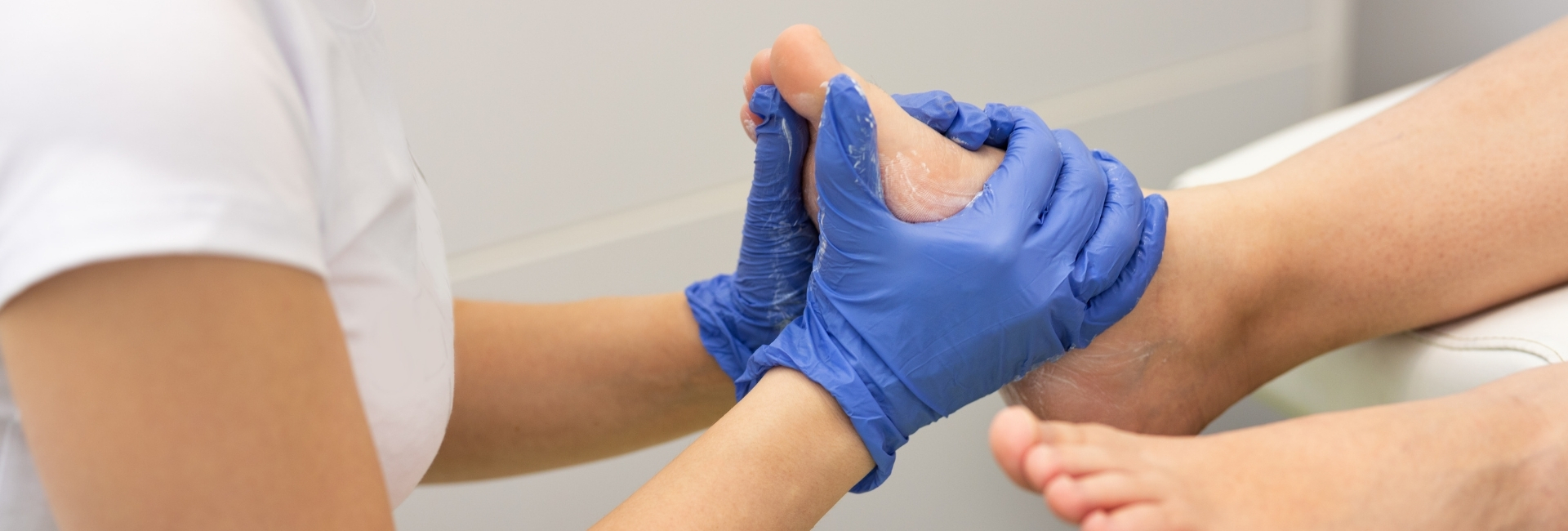
Foot care in diabetes is more than personal hygiene; it is a daily health routine that helps detect small skin problems early and prevent wounds.
People with loss of sensation may not notice heat, friction or small cuts. Care should therefore be performed attentively with visual checks.
- Gentle cleaning with lukewarm water
- Drying thoroughly between the toes
- Protecting skin from cracks
- Safe nail care
Washing and drying
Feet should be washed daily with lukewarm water, not soaked for long periods, and dried gently, particularly between the toes. Water temperature may be checked with a thermometer or by someone without loss of sensation, rather than by hand.
Skin care
An appropriate moisturizer may be applied to dry areas, but cream should not be applied between the toes. If cracks, blisters or irritation appear, people should promptly request professional assessment rather than treat themselves, particularly when sensation or circulation is impaired.
Nail and callus care
Nails should be cut straight across without cutting deeply into the corners. People with vision problems, loss of sensation or poor circulation should seek professional help for nail and callus care.
Things to avoid
Cutting calluses, using caustic corn treatments, applying hot-water bottles or putting unknown products on wounds can damage the skin.
Take small changes seriously
If you notice a cut, crack, blister, redness or discharge, consult a healthcare professional instead of treating it yourself.
Related content
Scientific sources
This information is for general education. The assessment and treatment appropriate for you are determined by a medical examination.