


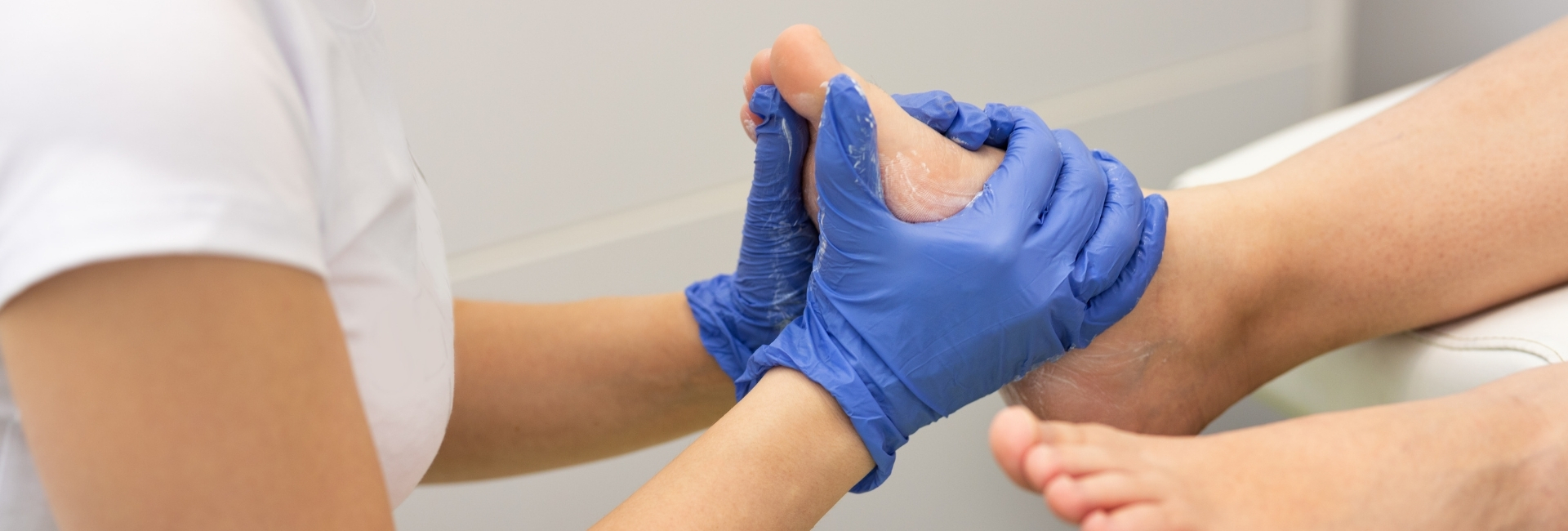
Diabetic foot wounds often begin with apparently minor problems such as shoe irritation, pressure beneath a callus, small cuts, cracks or burns.
Loss of sensation, poor circulation, constant pressure and infection may delay recognition or healing of these wounds.
- May heal slowly
- May tend to recur
- May be vulnerable to infection
- May progress into deeper tissues
How do wounds begin?
Shoe irritation, pressure beneath a callus, small cuts, cracks, burns and trauma may develop into serious wounds in people with diabetes.
Why might they fail to heal?
Inadequate circulation, infection, constant pressure and poor blood sugar control may adversely affect healing.
Common locations
The sole, between the toes, the heel and areas over bony prominences may be more exposed to pressure and friction.
Preventing progression
Wound depth, infection, circulation and pressure are assessed together; continuing to bear weight on a wound may delay healing.
- Keep the wound clean and protected
- Do not cut tissue or use products without guidance at home
- Follow offloading recommendations
- Keep your follow-up appointments
Do not wait and watch a wound
A person with diabetes who has a new open wound, discharge, unpleasant odor or an enlarging wound should obtain professional assessment the same day, within one working day at the latest.
What is discussed during wound assessment?
How long the wound has been present, whether it has opened in the same area before and the footwear used help with assessment. Provide information about previous dressings, antibiotic use and any vascular studies. A wound that looks small on the surface does not mean the tissue beneath is unaffected.
The care plan aims both to cover the wound and identify factors hindering healing. Pressure, circulation and infection may require different interventions. The plan is adjusted according to changes at follow-up; a product used by someone else may not suit your wound.
Related content
Scientific sources
This information is for general education. The assessment and treatment appropriate for you are determined by a medical examination.
Further reading: NIDDK foot health · NICE NG19 · AAOS patient guide