


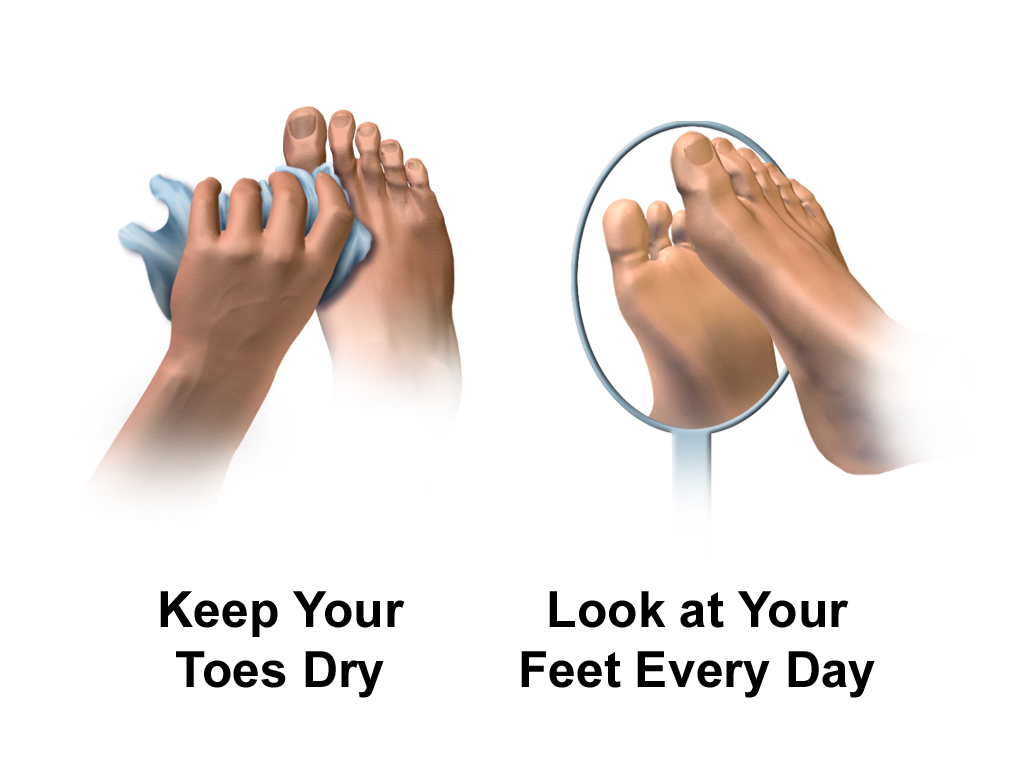
Regular foot care in people with diabetes helps detect small changes before a wound progresses. The routine should be brief, gentle and practical every day.
These recommendations provide general information. If there is loss of sensation, a circulation problem, an active wound or a nail problem, a healthcare professional should determine the personal care plan.
- The soles and spaces between toes should be checked daily.
- Feet should be washed with lukewarm water and dried gently.
- Moisturizer should not be applied between the toes.
- Inside shoes should be checked before every use.
Daily visual checks
Look for redness, cracks, cuts, blisters, calluses, color changes and problems around the nails. If the sole cannot be seen, use a mirror or help from a family member.
Washing and moisturizing
Check water temperature with an elbow or thermometer; do not soak the foot for a long time. Dry thoroughly, especially between toes, and apply a thin layer of an appropriate moisturizer to dry skin.
Nail and callus care
Cut nails straight across without cutting deeply into corners. Seek professional help for vision or manual dexterity problems, thickened nails, ingrown nails or poor circulation; do not cut calluses or use chemical corn treatments.
Choosing shoes and socks
Choose shoes with a soft lining and adequate width that do not squeeze the foot. Break in new shoes for short periods; wear clean, dry socks that are not tight.
Things to avoid
Walking barefoot even indoors, applying a hot-water bottle or heater directly to the foot, using arbitrary products on wounds and cutting calluses may increase injury risk.
A care routine is not wound treatment
For an open wound, discharge, new swelling, redness or increased warmth, do not wait with home care; seek professional assessment the same day.
Related content
Scientific sources
This information is for general education. The assessment and treatment appropriate for you are determined by a medical examination.